Cursed house Multiplayer(GMM)
- 4.2
- Rating
- 10.00M
- Installs
- Free
- Price

 Analysis by App-foxy
I went into Cursed house Multiplayer(GMM) expecting a compact role-playing game built around one clear problem: getting out of a house that refuses to let you leave. That simple setup creates an immediately readable goal, but the multiplayer label also changes how I judge it. A game like this is not only about atmosphere or escape-room tension; it also has to make progress feel understandable, pressure feel fair, and spending feel optional rather than necessary.
The game is free to download and is aimed at players aged Everyone 10+, which makes it approachable for younger players and casual groups. It was released on October 14, 2023, and comes from SUSSY BAKA DEV. The current version is 1.7.4, with Android 6.0 or later required. Those details matter because this is the kind of title people may discover through a quick recommendation and install on an older phone rather than on a dedicated gaming device.
After spending time with it, my impression is mixed in a useful way. The central idea is easy to understand, and the cursed-house setting gives every objective a little more urgency than a normal exploration game. At the same time, the experience is best for players who enjoy uncertainty, repeated attempts, and the social tension of solving a threatening situation together. It is not the game I would choose when I want a polished, story-heavy role-playing adventure with a carefully explained world.
You May Also Like

 Blood Strike: 2.5 Anniversary
Blood Strike’s Loadouts Turn Every Drop Into a Tactical Gamble
A close look at Blood Strike’s custom loadouts: how fast access to signature weapons reshapes its battle royale rhythm, rewards preparation, and narrows the gap between fights.

 Pandora - Music & Podcasts
Pandora’s Music Is Easy to Start, but Harder to Recover
Pandora’s strength is its low-effort path from a seed to a station. Its weak spot is how much confidence it asks you to place in connection, setup, and quiet recovery.

 8 Ball Pool
 Is Built on Rivalries, Rematches, and Routine
A close look at the rivalries, rematches, shared routines, and unanswered safety questions that turn a quick pool match into a persistent mobile community.

 Samsung Music
’s Quiet Strength Is Playing What You Already Own
Its reach comes less from spectacle than from dependable access to a personal library. That simplicity is both the app’s strongest retention engine and its ceiling.

 AccuWeather: Weather Radar
AccuWeather Review: A Quick, Clear Forecast for Everyday Decisions
For everyday plans, the best forecast is the one you can understand quickly. AccuWeather makes rain timing, radar, and local conditions easy to act on, with a few trade-offs.

 Hill Climb Racing
Why Hill Climb Racing Still Turns Crashes Into One More Run
A tiny car, a bumpy hill and one more upgrade: Hill Climb Racing keeps resurfacing because its simple chaos makes every near-miss feel personal.
More From Our News Desk
View All News


How the cursed-house setup shapes the experience
I’d begin by looking at how the locked-house premise sets expectations: it gives the group one urgent goal, while making careful observation matter as much as quick reactions. That focus can make a short session feel purposeful, but it also means the game’s appeal depends on enjoying the pressure rather than expecting a broad RPG adventure. From there, the next question is how that pressure plays out when the session gets busy.
A focused premise that gets you moving quickly
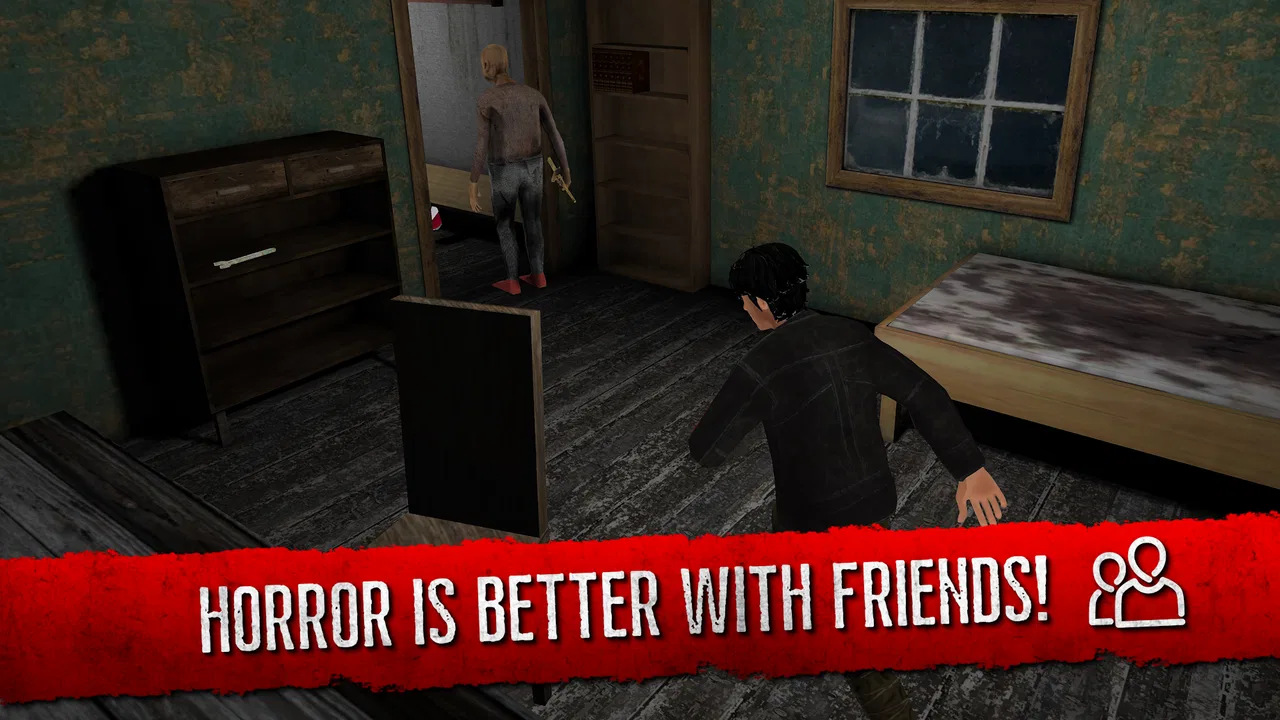
The strongest part of the design is its immediate objective. You are not wandering through an open-ended fantasy world wondering what matters. You are trying to escape a house that keeps you locked in, and that gives exploration a practical purpose. Rooms, clues, obstacles, and suspicious details all feel connected to the same question: what will finally let me get out?
I like this kind of focus because it makes short sessions worthwhile. If I only have a little time, I can still enter with a concrete intention instead of needing to remember a long quest chain. The house also works naturally as a multiplayer setting. A confined location gives players a shared problem, while the danger of the setting encourages everyone to pay attention rather than treating the game as a relaxed sightseeing trip.
That focus can also become a limitation. Players who prefer character-building, broad maps, or a large number of independent quests may find the experience narrow. The role-playing classification sets a certain expectation, but the appeal here comes more from the escape challenge and the pressure of the house than from the depth of a traditional party-based RPG. I would recommend it to someone who enjoys horror-flavored problem solving before I recommend it to someone looking for a long narrative campaign.
Why multiplayer changes the way I play
Playing with other people changes the value of nearly every discovery. A clue that seems minor when I am alone can become useful when another player is checking a different part of the house. Communication matters because the group has to decide whether to investigate, retreat, or risk losing time by testing an uncertain idea.
One practical habit helped me more than I expected: I treated every attempt as an information-gathering run, not only as a win-or-lose escape attempt. When something went wrong, I tried to remember which route had been checked, which object had already been tested, and which decision had caused the group to split up. That approach reduces repeated confusion and makes the next session feel like progress even when the house still wins.
For a small group of friends, this creates a good evening game. One person can keep track of the route, another can watch for danger, and another can focus on interpreting what the environment is suggesting. The important point is not to assume that the loudest player has the best plan. In a tense house, rushing toward the first possible solution can be less useful than having one person pause and organize what everyone has already learned.
Progress feels better when you manage pressure
The house is most effective when I resist the urge to interact with everything immediately. Curiosity is part of the fun, but careless exploration can turn the session into a sequence of frantic reactions. I found it more satisfying to establish a mental route first, then decide which areas deserved a closer look and which could wait.
This creates a meaningful trade-off between speed and certainty. Moving quickly may preserve momentum, but a rushed decision can leave the group without a clear plan. Searching carefully may reveal a better path, but it can also make the session feel slower for players who want constant action. The game works best when everyone agrees on that rhythm before starting.
My most useful tip is to keep spoken information short and specific. Instead of saying that a room “seems important,” describe what changed, what was tried, and what still needs testing. In a multiplayer escape scenario, clear communication is almost a tool in itself. It prevents two players from repeating the same action and gives quieter members a real chance to contribute.
Who will enjoy the pressure, and who may not
I would point this game toward players who like tense exploration, cooperative problem solving, and the possibility that a familiar room may become stressful after several visits. It also suits people who enjoy learning through attempts rather than receiving every answer through a tutorial. The confined setting makes it easy to gather a few friends around the same goal without asking them to learn a huge collection of systems first.
I would be more cautious recommending it to someone who dislikes being chased, trapped, or forced to repeat a difficult situation. The same uncertainty that makes the house interesting can feel irritating if you prefer transparent rules and steady progress. Players who want a relaxing solo RPG, a deep character-stat system, or a strongly guided plot should probably choose another type of game.
A realistic everyday use case is a short evening session with friends after work or school. You can agree on a simple plan, play until the group reaches a breakthrough or gets overwhelmed, and then stop without needing to complete a massive campaign. The game is less suitable for someone who wants a quiet commute game with no coordination, because the multiplayer focus makes conversation and shared attention part of the experience.
Spending, access, and the question of fairness
The download itself is free, so the initial barrier is low. The game includes in-app purchases ranging from $0.99 to $15.99 per item. That is the part I would pay attention to before recommending it to a child or to anyone trying to keep mobile gaming strictly cost-free.
I do not treat the presence of purchases as proof that the game is unfair. What matters is whether spending changes the competitive outcome or simply offers optional convenience, and I would not assume either case without seeing the purchase effect clearly in play. My practical advice is to begin without buying anything, learn the escape loop, and decide whether the base experience already gives you enough value.
That approach is especially sensible here because the main enjoyment comes from solving the house with other people. If a purchase only removes part of the uncertainty or shortens the learning process, it may reduce the very tension that makes the game interesting. On the other hand, if a player dislikes repetition, an optional purchase can look more tempting. I would make that decision only after understanding exactly what it changes.
For families, the Everyone 10+ rating is a useful starting point, but age labels do not replace personal judgement. A younger player may be comfortable with the setting, while another may find the locked-house theme too intense. I would watch the first session rather than assuming the rating tells the whole story.
Competitive fairness depends on what multiplayer means to you
The word “multiplayer” can describe very different experiences, so I would not judge this game by the standards of a competitive action game. The important fairness question is whether every participant can understand the situation and make meaningful decisions, rather than whether one player can simply overpower everyone else.
From my perspective, the healthiest way to approach it is as a cooperative challenge. The group should share discoveries and treat failure as a clue about the house rather than blaming the person who made the risky choice. That mindset makes the experience more welcoming and prevents the session from turning into an argument over who caused the escape attempt to fail.
There is also a social trade-off. Experienced players may naturally take control because they recognize patterns faster, while newcomers may become passengers who only follow instructions. I recommend rotating responsibilities: let one player lead the route for a while, then let someone else decide which area to investigate. This keeps the game from becoming a one-person demonstration and makes the multiplayer element feel genuinely useful.
If you are specifically searching for ranked competition, precise matchmaking, or a skill ladder, this is probably not the right comparison point. I would choose a dedicated competitive game for that purpose. The appeal here is shared pressure and escape-focused decision making, not proving who has the highest mechanical skill.
Version, device expectations, and practical patience
The current version is 1.7.4, and the minimum Android requirement is 6.0. That makes the game reachable for a broad range of Android devices, although compatibility on paper does not guarantee the same comfort on every phone. A smaller screen, older hardware, or a weak connection can make a tense multiplayer session feel more frustrating than it should.
Before inviting friends, I would install it early and test the basic flow on the device that will actually be used. That is a small but worthwhile step: it avoids discovering during a group session that the phone is uncomfortable to play on or that the player needs more time to understand the controls. The game benefits from attention, so anything that makes the interface harder to read works against its main strength.
I also recommend agreeing on expectations before starting. One player may want to experiment with every suspicious object, while another may want to escape as efficiently as possible. Neither approach is automatically wrong, but mixing them without discussion can create unnecessary friction. A two-minute plan can make the whole session feel more deliberate.
What I would still examine before spending money
The purchase range is clear, but the value of each item depends on its actual effect on progress and multiplayer balance. That is the point where I would remain careful. I would want to understand whether a purchase changes appearance, convenience, access, or the difficulty of solving the house before deciding that it is worthwhile.
I would also pay attention to how the game handles new players joining a group. A multiplayer escape game can be welcoming if everyone receives enough context to participate, but it can be confusing if newcomers are expected to know what previous players already discovered. When playing with friends, I solve that problem by giving a quick spoken recap instead of assuming everyone remembers the last attempt.
Another practical unknown is how much repetition each player will tolerate. Some people enjoy refining a route until they can execute it confidently; others need fresh locations and surprises to stay interested. If you are in the second group, try the free experience first and judge your own response rather than buying into the expectation of a long-term game.
The same caution applies to the word “role-playing.” If you mainly want equipment upgrades, detailed character choices, and a large story, check whether the escape premise itself is enough for you. I found the game more compelling as a tense house challenge with role-playing elements than as a conventional fantasy RPG. That distinction will save the right player money and prevent the wrong player from expecting a different genre.
My trust verdict after weighing the whole package
The game has a clear identity. It takes the familiar fear of being trapped in a cursed house and turns it into a shared problem that rewards observation, communication, and controlled risk. I like that the premise is easy to understand, yet the pressure gives ordinary decisions more weight. The best moments come when the group stops reacting randomly and starts building a plan from what it has learned.
Its limitations are just as clear. The narrow setting will not satisfy everyone, multiplayer requires the right group dynamic, and the presence of purchases means I would not recommend spending immediately. Players who want a fully transparent competitive system or a deep, traditional RPG should look elsewhere. Players who dislike repetition may also lose interest once the initial mystery becomes familiar.
The game has reached over ten million installs and holds a 4.1 average from around fifty-nine thousand ratings, which suggests that the concept has found a substantial audience. I do not use popularity as a substitute for personal fit, but it does make the game easier to recommend as something worth trying with friends. Since the download is free, the sensible route is to test the core experience first and keep your wallet closed until you understand what the purchases actually add.
My final recommendation is simple: install it if you want a cooperative, pressure-filled escape game with a cursed-house theme and you enjoy learning through trial and error. Start with a patient group, communicate clearly, and treat early failures as information. Skip it if you need a calm solo RPG, a deep story, or a clearly defined competitive ladder. For the right players, Cursed house Multiplayer(GMM) is a fun social challenge; for everyone else, the same locked-room tension may feel more tiring than exciting.
FAQs for Cursed house Multiplayer(GMM)
01What is Cursed House Multiplayer (GMM) about?
Cursed House Multiplayer (GMM) is a thrilling horror game that allows players to team up with friends or other online users to explore a haunted house. The objective is to solve puzzles, avoid traps, and uncover the mysteries within. With immersive graphics and spooky sound effects, it offers a chilling multiplayer experience.
02Is Cursed House Multiplayer (GMM) free to play?
Cursed House Multiplayer (GMM) is free to download and play. However, it may include in-app purchases for additional content, such as skins, power-ups, or exclusive levels. These purchases are optional and are not necessary to enjoy the full game experience.
03What platforms is Cursed House Multiplayer (GMM) available on?
Cursed House Multiplayer (GMM) is available for both Android and iOS devices. You can download it from the Google Play Store or the Apple App Store. Ensure your device meets the minimum system requirements for optimal performance and enjoy the game seamlessly on your smartphone or tablet.
04Can I play Cursed House Multiplayer (GMM) offline?
Cursed House Multiplayer (GMM) requires an internet connection to play, particularly for the multiplayer features. The game relies on online servers to connect players in real-time. However, certain single-player modes or practice levels might offer offline play options, allowing you to explore the haunted house without an internet connection.
05How do I ensure a safe gaming experience in Cursed House Multiplayer (GMM)?
To ensure a safe gaming experience, be cautious when interacting with other players. The game has a reporting feature for any inappropriate behavior or content. Additionally, parental controls can be set on your device to restrict in-app purchases and manage screen time, providing a secure environment for younger players.
Pros
- Engaging multiplayer modes for diverse gameplay.
- Intuitive controls make it easy for beginners.
- Regular updates with new content and features.
- Visually appealing graphics enhance the experience.
- Supports cross-platform play for wider reach.
Cons
- In-app purchases can be quite expensive.
- Occasional server lag affects gameplay.
- Limited solo play options available.
- Battery consumption is relatively high.
- Requires constant internet connection.

Cursed house Multiplayer(GMM)
Gallery